Wine Culture (English)
Decanting Wine: When to Decant, How Long, and When Not To
Th11
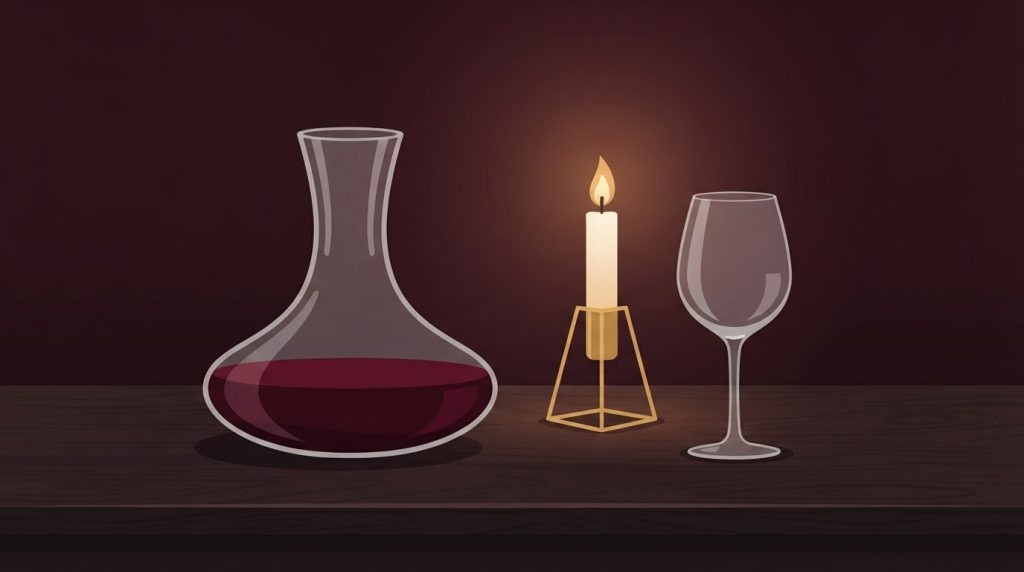
Few rituals look as elegant as pouring a red wine slowly into a glass decanter. Yet many wine lovers wonder whether decanting really changes anything, or whether it is just theatre. The honest answer: it depends on the wine. Decanting does two quite different jobs, and knowing which one you need is the key to doing it well.
Two Reasons to Decant
1. Separating the wine from its sediment
As red wines age in bottle, pigments and tannins slowly bind together and fall out of solution as sediment. Unfiltered wines and traditional styles such as Vintage Port are well known for throwing a heavy deposit. The sediment is harmless, but it is gritty and bitter in the mouth and makes the wine look cloudy. Decanting lets you pour the clear wine off and leave the deposit behind in the bottle.
2. Giving a young wine air
Young, structured reds, think Cabernet Sauvignon, Syrah or Nebbiolo, can taste tight and closed straight after opening. Pouring them into a wide decanter exposes the wine to oxygen, which can help aromas open up and make firm tannins feel smoother. Air also helps some “reductive” aromas, such as a whiff of struck match, to fade. Wine professionals still debate how much aeration truly changes a wine, but most agree that a robust young red usually shows better after some time in the glass or decanter.
Which Wines Benefit, and Which Don’t
- Good candidates: young full-bodied reds with firm tannins; older reds with visible sediment; Vintage Port; some powerful young whites, such as oaked Chardonnay, that seem muted when first opened.
- Handle with care: very old, fragile wines. Their aromas can fade quickly once exposed to air, so decant them gently, only to remove sediment, and serve soon after.
- Usually unnecessary: light, fruity reds made for early drinking, most crisp whites and rosés, and sparkling wines, where decanting would only cost you bubbles.
How to Decant, Step by Step
- Stand the bottle upright. For an older wine with sediment, stand it up for a day or more before opening so the deposit settles to the bottom.
- Open carefully. Remove the capsule and cork without shaking the bottle. Old corks can be fragile, so go slowly.
- Use a light source. Hold the neck of the bottle over a candle, a torch or a phone light. This lets you see the wine as it passes through the shoulder of the bottle.
- Pour in one steady motion. Tilt the bottle gradually and let the wine run down the inside of the decanter.
- Stop when the sediment appears. As soon as you see a dusty trail or dark flecks reaching the neck, stop. The last little bit stays in the bottle.
For a young wine with no sediment, you can skip the candle and simply pour more vigorously to encourage aeration.
How Long Should Wine Stay in the Decanter?
There is no fixed rule, but these ranges are a sensible starting point:
- Old, delicate reds: decant just before serving and drink within a short time.
- Medium-bodied reds: around 30 minutes to an hour.
- Young, powerful reds: one to two hours, sometimes longer.
The best guide is your own palate. Taste a small amount right after decanting, then again every 20 to 30 minutes, and serve when the wine tastes most open and harmonious to you.
Decanting in a Tropical Climate: Notes from Vietnam
Most decanting advice is written for cool European dining rooms. In Vietnam, where indoor temperatures in Ho Chi Minh City can easily sit around 30°C without air conditioning, a decanter of red wine warms up quickly. A wide decanter exposes more surface area, so the wine can become soft and alcoholic-tasting long before the meal ends.
A few practical habits help: chill the bottle slightly before decanting so the wine starts at around 16–18°C, keep the decanter out of direct sunlight, and if the room is warm, place the decanter in a bowl of cool water between pours. For young reds served with Vietnamese dishes such as bò lúc lắc (cubes of wok-seared “shaking beef” with black pepper) or grilled meats, a short decant of 30–60 minutes often softens the tannins nicely without letting the wine overheat.
No Decanter? No Problem
Any clean glass jug or carafe will do the job. For aeration alone, simply swirling wine in a large glass works too. To remove sediment without a decanter, stand the bottle upright and pour slowly and steadily, stopping before the last part of the bottle.
📖 Glossary
- Decanting: pouring wine from its bottle into another vessel, usually to remove sediment or to aerate it.
- Sediment: the natural deposit of pigments and tannins that forms in some wines as they age.
- Aeration: exposing wine to oxygen to help aromas and texture develop.
- Tannin: compounds from grape skins, seeds and oak that create a drying sensation in the mouth.
- Reduction: aromas such as struck match or rubber that can appear when a wine has had little contact with oxygen; they often fade with air.
Decanting is not a test of sophistication but a simple tool. Use it to rescue an older wine from its sediment or to help a young one show its best, and you will get more pleasure from every glass you share at the table.
Please enjoy responsibly. Never drink and drive. Intended for adults of legal drinking age.
WinesFamily – Sharing wine culture | winesfamily.vn