
Wine Culture (English)
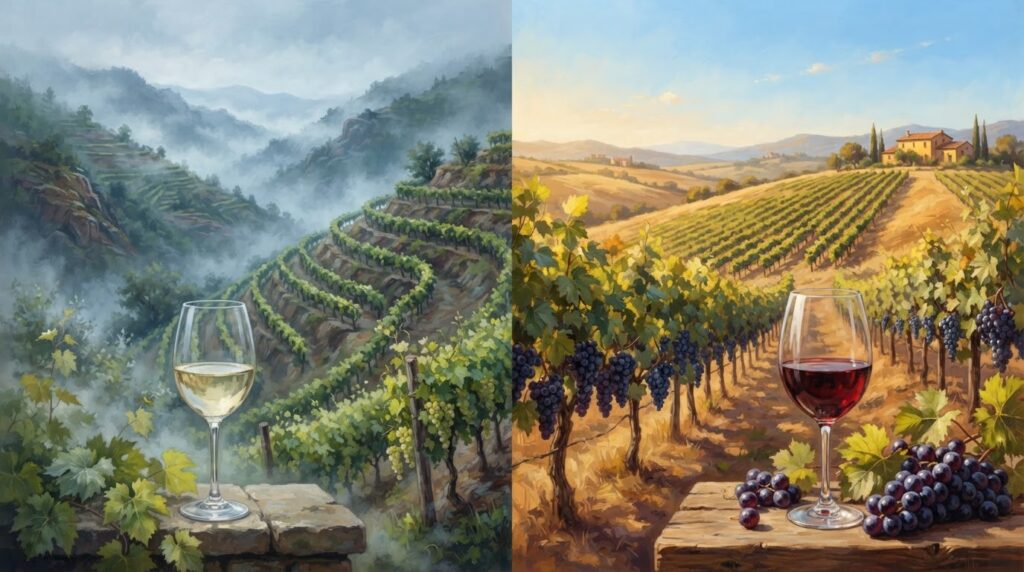
Cool Climate vs Warm Climate Wine: How Temperature Shapes the Taste in Your Glass
Th11
Pour a glass of Chablis next to a Chardonnay from a sunny corner of California and you might struggle to believe they come from the same grape. One is lean, crisp and almost salty; the other is round, ripe and generous. The biggest reason is not the winemaker or the price tag. It is climate, and once you understand it, a wine list starts to make a lot more sense.
Why temperature matters so much to a grape
As grapes ripen, sugar builds up and acidity falls. Heat speeds this up; cool weather slows it down. Researchers such as climatologist Gregory Jones have shown that quality wine grapes are mostly grown where the average growing-season temperature sits roughly between 13°C and 21°C (about 55–70°F). Toward the cool end of that range, grapes ripen slowly and keep their acidity. Toward the warm end, they ripen fully and quickly, building more sugar, which yeast later turns into alcohol.
In 1944, Maynard Amerine and Albert Winkler of the University of California, Davis, created a way to measure this: the Winkler index. It adds up how far each day’s average temperature rises above 10°C (50°F) across the growing season (April to October in the Northern Hemisphere) and sorts regions into five bands, from Region I (coolest) to Region V (hottest). It is still a useful starting point for comparing vineyard areas.
What cool-climate wines taste like
- Higher acidity: a mouth-watering, refreshing feel.
- Moderate alcohol: often lighter and more delicate in body.
- Fresher fruit: green apple, citrus, pear, cranberry, red cherry.
- More herbal or floral notes: in some grapes, such as Sauvignon Blanc or Cabernet Franc, cooler conditions can bring leafy, green-pepper aromas.
Classic cool-climate places include Champagne, Chablis and the Mosel in Europe, plus Marlborough in New Zealand and Tasmania in Australia. It is no accident that much of the world’s sparkling wine comes from cool regions: high natural acidity is exactly what a good sparkling base wine needs.
What warm-climate wines taste like
- Riper, darker fruit: blackberry, plum, fig, sometimes a jammy or dried-fruit character.
- Higher alcohol: more sugar in the grapes means more potential alcohol.
- Fuller body and softer acidity: a rounder, more generous texture.
- Riper tannins in red wines: often smoother and less grippy.
Think of the Barossa Valley in South Australia, Napa Valley in California or the southern Rhône in France. These regions are famous for bold reds, and their best producers work hard to keep freshness and balance alongside all that ripeness.
One grape, two personalities
Climate is easiest to taste when you compare the same variety from different places:
- Chardonnay: Chablis tends to be crisp, citrusy and mineral; warm-climate versions are often riper, with tropical fruit and a creamier feel.
- Syrah/Shiraz: the northern Rhône often gives peppery, savoury, medium-bodied wines; Barossa Shiraz is usually richer, with dark fruit and sweet spice.
- Sauvignon Blanc: the Loire Valley leans toward citrus and flinty notes; warmer sites bring riper, more tropical aromas.
It is not just latitude
A region’s distance from the equator is only part of the story. Several local factors can cool down a warm place:
- Altitude: temperature drops as you climb, which is why high vineyards in places like Mendoza, Argentina, can make fresh wines despite strong sunshine.
- Ocean currents and fog: the cold Humboldt Current off Chile and the Benguela Current off South Africa cool coastal vineyards, and Pacific fog does the same for parts of coastal California.
- Day–night temperature swings: warm days build ripeness, cool nights help hold on to acidity and aroma.
Climate is also changing. Many regions now harvest earlier than they did a few decades ago, and places once thought too cold, such as southern England, have become known for quality sparkling wine.
Using climate at the table
Climate is a handy shortcut for food pairing. Fresh, high-acid cool-climate wines suit light, bright food: seafood, salads and herb-heavy dishes. In Vietnam, that includes dishes such as gỏi cuốn (fresh rice-paper rolls filled with shrimp, pork and herbs) or a green papaya salad, where lime, fresh herbs and fish sauce call for a wine with lively acidity. Riper, fuller warm-climate reds stand up better to grilled and braised meats, such as Vietnamese grilled pork or slow-cooked beef dishes. In a tropical climate like Vietnam’s, lighter, fresher styles served well chilled are also simply more refreshing.
Next time you read a label, look at where the wine comes from and ask: was this grape grown in sunshine or in mist? The answer will tell you a surprising amount about what is in the glass.
📖 Glossary
- Growing season: the months from budburst to harvest when the vine is actively growing.
- Winkler index: a heat-summation scale (growing degree days) used to compare how warm wine regions are.
- Acidity: the tart, refreshing component of wine that makes your mouth water.
- Body: how light or heavy a wine feels in the mouth.
- Diurnal range: the difference between daytime and night-time temperatures.
Please enjoy responsibly. Never drink and drive. Intended for adults of legal drinking age.
WinesFamily – Sharing wine culture | winesfamily.vn