
Wine Culture (English)
Gỏi Cuốn and Wine: How to Pair Vietnamese Fresh Spring Rolls, Herbs and Dipping Sauce
Th11
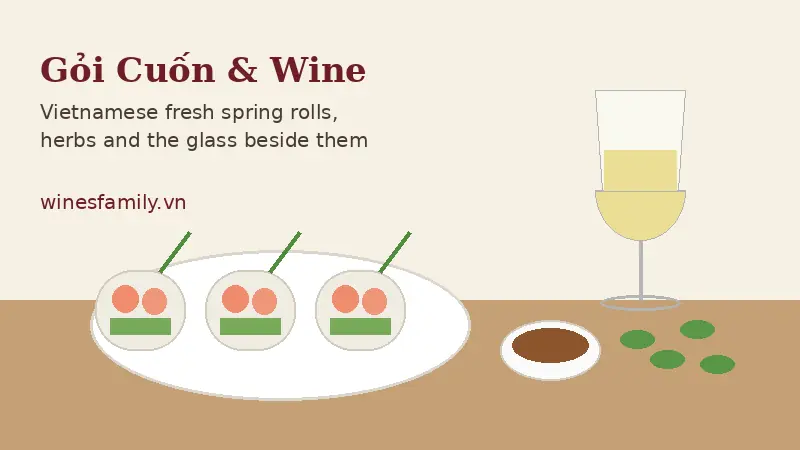
Few dishes look as fresh on the table as gỏi cuốn, the Vietnamese fresh spring roll often called a “summer roll” in English. Unlike the fried spring rolls many visitors know, gỏi cuốn is never cooked once it is rolled: soft rice paper is wrapped around poached shrimp, slices of boiled pork, rice vermicelli, lettuce and a generous handful of herbs, then dipped into a thick, savory sauce. Light, cool and fragrant, it is one of the most wine-friendly dishes in Vietnamese cuisine, as long as you choose the glass with care.
What is in a gỏi cuốn?
Gỏi cuốn is especially associated with southern Vietnam and Ho Chi Minh City, where it is sold everywhere from street stalls to family kitchens. A classic roll contains:
- Bánh tráng – thin rice paper, briefly moistened so it becomes soft and slightly chewy.
- Shrimp and pork – usually poached shrimp, halved so the pink side shows through the paper, and thin slices of boiled pork.
- Bún – fine rice vermicelli that adds body without much flavor.
- Fresh greens and herbs – lettuce plus herbs such as mint, Thai basil and perilla, often with a stalk of garlic chive poking out of one end.
The roll itself is delicate. The real flavor drivers are the herbs and the dipping sauce, so that is where a wine pairing should begin.
Start with the sauce, not the filling
In the south, gỏi cuốn is typically served with a peanut-hoisin sauce: hoisin (a sweet, dark fermented-soybean sauce) thinned and enriched with peanut, sometimes with chili on top. Other cooks serve nước chấm, the familiar dipping sauce of fish sauce, lime, sugar, garlic and chili. These two sauces pull the pairing in different directions.
With peanut-hoisin sauce
This sauce is sweet, nutty and rich. Look for whites with a little more texture, or wines with a touch of residual sugar:
- Off-dry Riesling (for example a German Kabinett): its gentle sweetness matches the hoisin, while bright acidity keeps the peanut from feeling heavy.
- Pinot Gris from Alsace: rounder and softly spicy, it echoes the warm, toasty notes of the sauce.
- A dry or off-dry rosé: red-fruit flavors sit comfortably with the sweet-savory dip and the pork.
With nước chấm
Here the dip is sharp, salty and lime-bright, so the wine needs equally lively acidity or it will taste flat:
- Sauvignon Blanc: citrus and green, herbal notes mirror both the lime and the herbs inside the roll.
- Albariño from Rías Baixas: saline and zesty, a natural partner for shrimp.
- Dry Riesling: high acidity and lime-like fruit, a refreshing choice in warm weather.
The herbs: friend or foe?
Mint, basil and perilla can make heavily oaked, tannic wines taste bitter or out of place. The general rule for herb-driven dishes holds here: choose unoaked, aromatic wines with fresh acidity. Grüner Veltliner, Austria’s signature white, is a classic choice; it is often described as having green, herbal and white-pepper notes that blend into the herb basket rather than fighting it.
Bubbles for a crowd
Gỏi cuốn is usually shared, often as a starter at gatherings. A dry sparkling wine, whether a Brut Champagne, Crémant or Prosecco, is an easy, crowd-pleasing match: the bubbles and acidity refresh the palate between rolls and handle both sauces reasonably well.
Can you drink red?
Yes, but keep it light. A chilled, low-tannin red such as Gamay from Beaujolais or a delicate Pinot Noir can work with pork-heavy rolls and hoisin sauce. Avoid big, oaky reds: strong tannins clash with chili and herbs, and can make the shrimp taste metallic.
A cousin worth knowing: bò bía
On Saigon’s streets you will also find bò bía, a smaller roll of Chinese origin filled with jicama, Chinese sausage (lạp xưởng), egg and dried shrimp, also eaten with peanut-hoisin sauce. The sweet, savory sausage makes it a little richer than gỏi cuốn, so an off-dry Riesling or a fruity rosé is again a safe bet.
Serving tips for warm climates
- Serve aromatic whites and rosé well chilled, around 8–10°C, and light reds slightly cool, around 12–14°C.
- Roll gỏi cuốn just before serving; rice paper dries out and toughens if left standing.
- Offer both sauces and let guests compare: it is the simplest way to see how a dip changes a wine.
📖 Glossary
- Gỏi cuốn: Vietnamese fresh (unfried) spring roll wrapped in rice paper.
- Bánh tráng: Vietnamese rice paper.
- Nước chấm: Vietnamese dipping sauce based on fish sauce, lime, sugar, garlic and chili.
- Off-dry: a wine with a small, noticeable amount of residual sugar.
- Residual sugar: natural grape sugar left in a wine after fermentation.
WinesFamily – Sharing wine culture | winesfamily.vn
Please enjoy responsibly. Never drink and drive. Intended for adults of legal drinking age.