Wine Culture (English)
Volcanic Wines Explained: Etna, Santorini, Lanzarote and the Taste of Fire-Born Soils
Th11
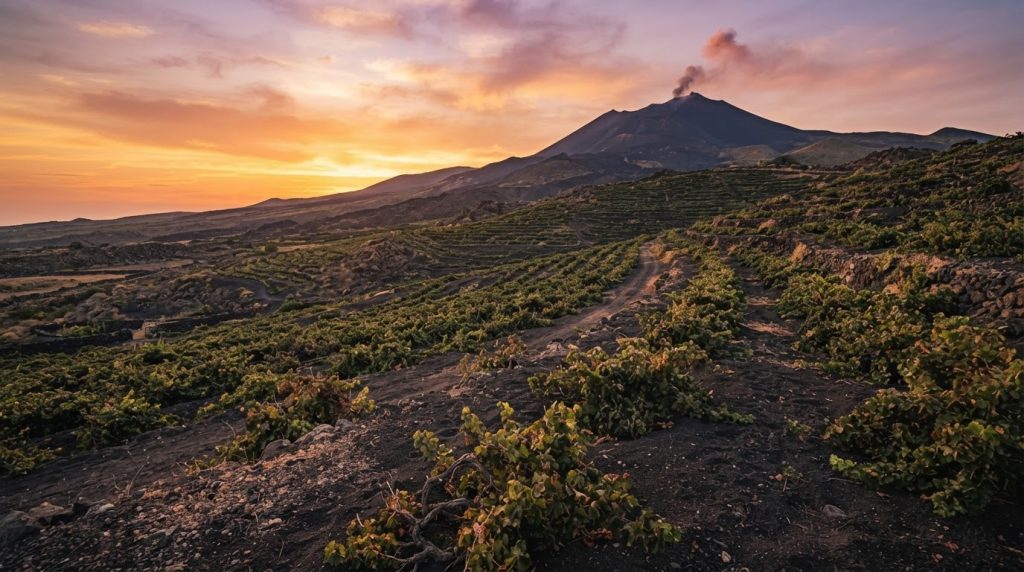
Picture vines growing out of black ash, on the flanks of an active volcano, or coiled into low baskets on a windswept island. Volcanic vineyards are among the most dramatic places on Earth where wine is made, and in recent years “volcanic wine” has become one of the most talked-about ideas in the wine world. But what does it actually mean, and can you taste it?
What makes a wine “volcanic”?
There is no single legal definition. The term simply describes wine from vines rooted in soils formed by volcanic activity: weathered lava (basalt), pumice, tuff and ash. These soils vary enormously from place to place, so “volcanic” is a family of terroirs rather than one flavour. What many of them share is good drainage, low organic matter and, in some cases, a loose, sandy texture that makes life hard for the vine. Struggling vines tend to give smaller crops, and wine lovers often find the results concentrated and taut.
Tasters frequently describe volcanic wines with words like “smoky”, “salty” or “mineral”. These are useful as descriptions of style, but it is worth being careful: scientists still debate how directly soil chemistry translates into flavour. Climate, altitude, grape variety and the winemaker’s choices all play a large part. The honest answer is that volcanic sites often produce wines with bright acidity and a firm, stony feel, and the landscape itself shapes how the vines are grown.
Mount Etna, Sicily: vineyards on an active volcano
Etna is Europe’s highest active volcano, and its vineyards climb its slopes to considerable altitudes. Lava flows from different eruptions have created a patchwork of soils of different ages, so neighbouring plots can give noticeably different wines. Etna became Sicily’s first DOC in 1968.
The signature red grape is Nerello Mascalese, which gives fairly pale, perfumed reds with red-fruit flavours and fine but firm tannins. They are often compared to Pinot Noir or Nebbiolo for their elegance rather than power. The key white grape is Carricante, known for high acidity and a lean, citrusy character. Many old vines here are trained as free-standing bushes, a traditional system called alberello.
Santorini, Greece: Assyrtiko in a basket
Santorini is what remains of a volcano whose huge Bronze Age eruption (around the 17th century BC) left behind a crescent-shaped island and a flooded caldera. The soils are mainly volcanic ash, pumice and sand, with almost no clay. That sandy make-up is one reason the phylloxera louse, which devastated European vineyards in the 19th century, never established itself here. As a result, many Santorini vines grow on their own roots, and some root systems are very old.
The island is dry and extremely windy, so growers weave the vine’s canes into a low, round basket called a kouloura. The grapes hang inside, sheltered from wind and sun. The star grape is Assyrtiko, a white variety that keeps striking acidity even in a hot climate, giving dry wines with citrus, a salty edge and real ageing potential. The island also makes a traditional sweet wine, Vinsanto, from sun-dried grapes.
Lanzarote, Canary Islands: vines in craters of ash
Between 1730 and 1736, a long series of eruptions buried large parts of Lanzarote under lava and ash. Farmers responded with remarkable ingenuity. In the area known as La Geria, they dug funnel-shaped hollows through the ash to reach the older soil beneath, planted a vine at the bottom of each, and built a low semicircular stone wall on the windward side. The black granules of ash, called picón, act like a mulch that helps hold moisture on an island with very little rain.
The result is one of the most surreal vineyard landscapes in the world: thousands of dark craters, each holding a single vine. The best-known local grape is Malvasía Volcánica, which makes aromatic whites, both dry and sweet.
Other volcanic regions worth knowing
Volcanic soils appear in many classic regions. Tokaj in Hungary, famous for its sweet wines, sits on volcanic hills. Parts of Soave in northern Italy grow on basalt. Campania, around Mount Vesuvius, and the Azores in the Atlantic also have volcanic vineyards with their own traditions. Exploring them side by side is a rewarding way to see how one broad soil type expresses itself through different grapes and climates.
How to enjoy volcanic wines at the table
Because many volcanic whites are crisp and saline, they are natural partners for seafood. A dry Assyrtiko or Carricante works well with grilled fish, shellfish and dishes finished with lemon and herbs. For readers in Vietnam, that same freshness suits steamed clams with lemongrass (nghêu hấp sả) or grilled squid with a squeeze of lime. Lighter Etna reds, served slightly cool, sit happily alongside grilled pork or mushroom dishes without overwhelming them.
When tasting, try to look past the romance of the label. Notice the acidity, the texture and the length of the finish. Ask whether the wine feels taut and stony or soft and fruity. That is the best way to form your own view on what “volcanic” means.
📖 Glossary
- Basalt: a dark rock formed from cooled lava.
- Pumice / tuff: light, porous volcanic rocks formed from ash and gas-rich lava.
- Caldera: a large crater formed when a volcano collapses after an eruption.
- Phylloxera: a tiny insect that attacks vine roots; it destroyed much of Europe’s vineyards in the 1800s.
- Kouloura: Santorini’s basket-shaped vine training system.
- Alberello: free-standing bush-vine training, common on Etna.
- Picón: volcanic ash granules covering Lanzarote’s vineyards.
Please enjoy responsibly. Never drink and drive. Intended for adults of legal drinking age.
WinesFamily – Sharing wine culture | winesfamily.vn